
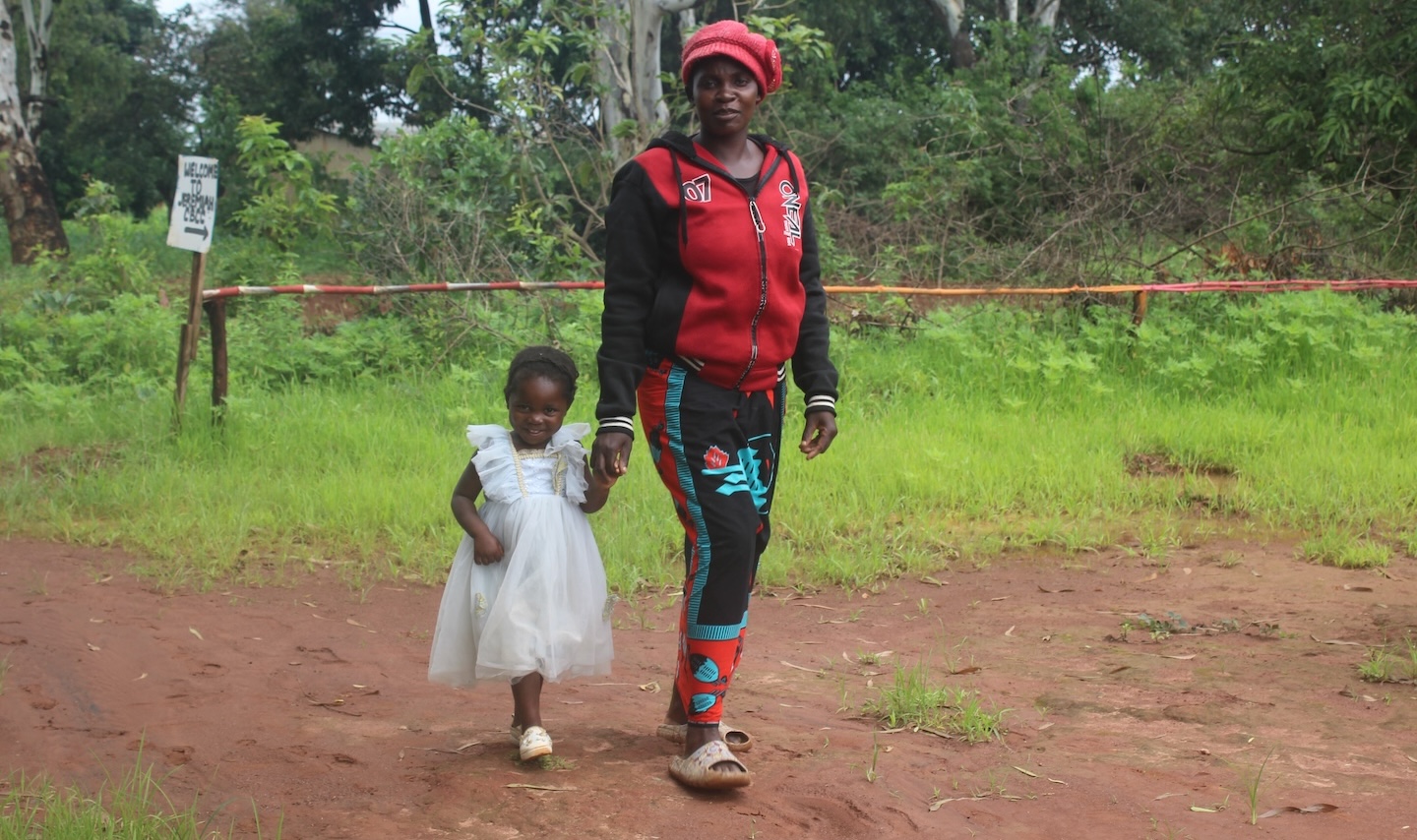
Where Stability Took Root in Northern Malawi: Catherine’s Story
Morning comes gently in northern Malawi. The hills are green, and families move through routines shaped by seasons they cannot always predict. In rural communities here, food security, clean water access, and steady income determine how childhood unfolds.
Stability depends on what families can grow, earn, and protect together. When resources shift — whether from economic strain or extreme weather — recovery can take years. And when that happens, the impact is felt most sharply by young children.
Carrying More Than One Household Could Hold
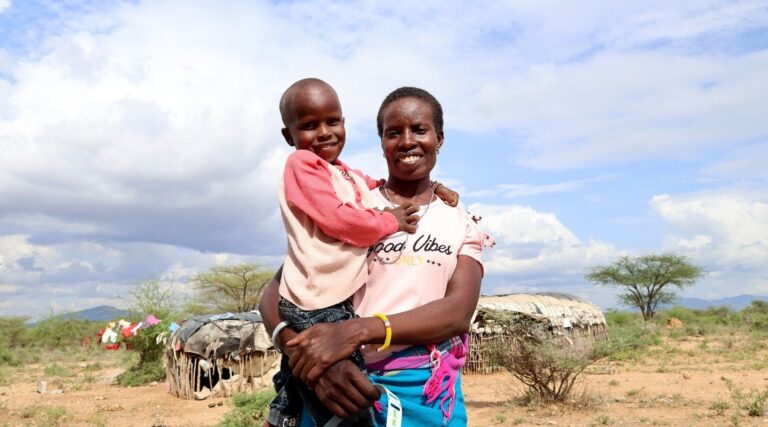
Thirty-one-year-old mother of four Catherine used to begin her days with a calculation: how to stretch what little she had to make sure everyone got something.
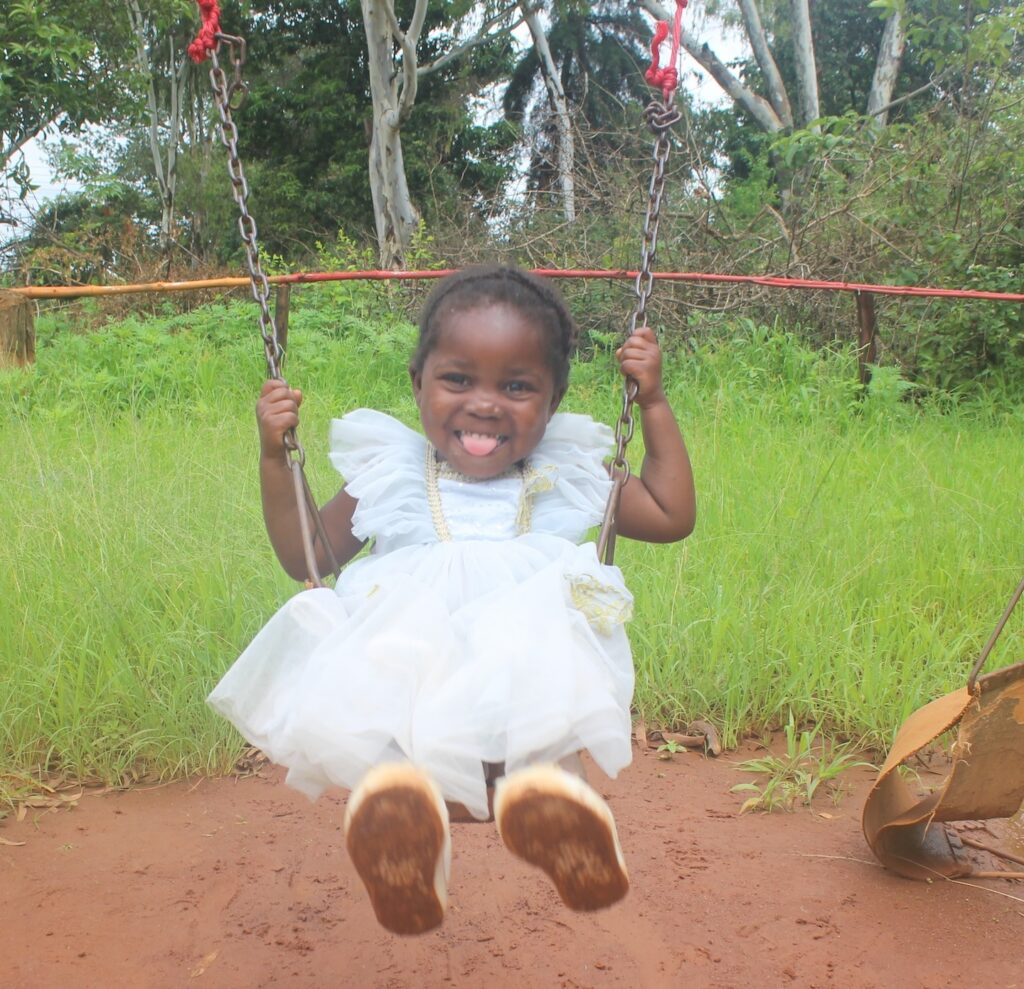
Small piecework jobs provided inconsistent income. Food was often insufficient. Her youngest daughter, three-year-old Ackness, struggled with recurring illness that required repeated trips to the local clinic.
The physical exhaustion was heavy. The emotional weight was heavier.
“There was a time when my family had no hope,” Catherine recalls. “I was exhausted from constantly begging for food and basic necessities, but as a mother, giving up was never an option. No matter how hard it was, I had to find a way to put food on the table every single day.”
So Catherine worked. There was no cushion for setbacks, no margin for planning. Just survival.
Small Steps Toward Steady Ground
Change did not arrive in a single moment. Lasting change begins with creating structure, which is what Feed the Children did.
When Feed the Children introduced programs in Catherine’s village, the first one she signed up for was the Village Savings and Loans Association (VSLA). The model is simple but powerful: community members save small amounts regularly, pool their funds, and access small loans to invest in income-generating activities.
For Catherine, that first savings cycle represented something new: control.
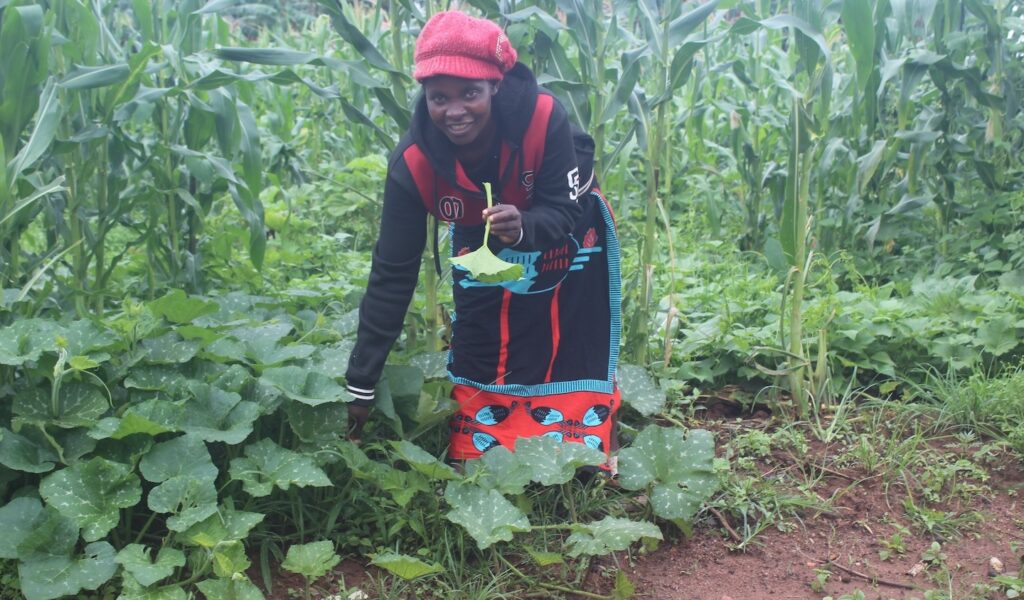
With savings, Catherine purchased a small piece of land. She began cultivating maize and vegetables, and invested in two goats. The plants and animals yielded not just food for Catherine and her family to eat, but, in time, grew into resources she could sell to earn additional income for school fees or other expenses.
At the same time, she began attending Care Group sessions, peer-led gatherings where parents learn practical lessons on hygiene, sanitation, child feeding, and safe water practices. These sessions are part of Feed the Children’s Health & WASH (water, sanitation, and hygiene) strategy, equipping caregivers with knowledge to implement water safety and health best-practices at home.
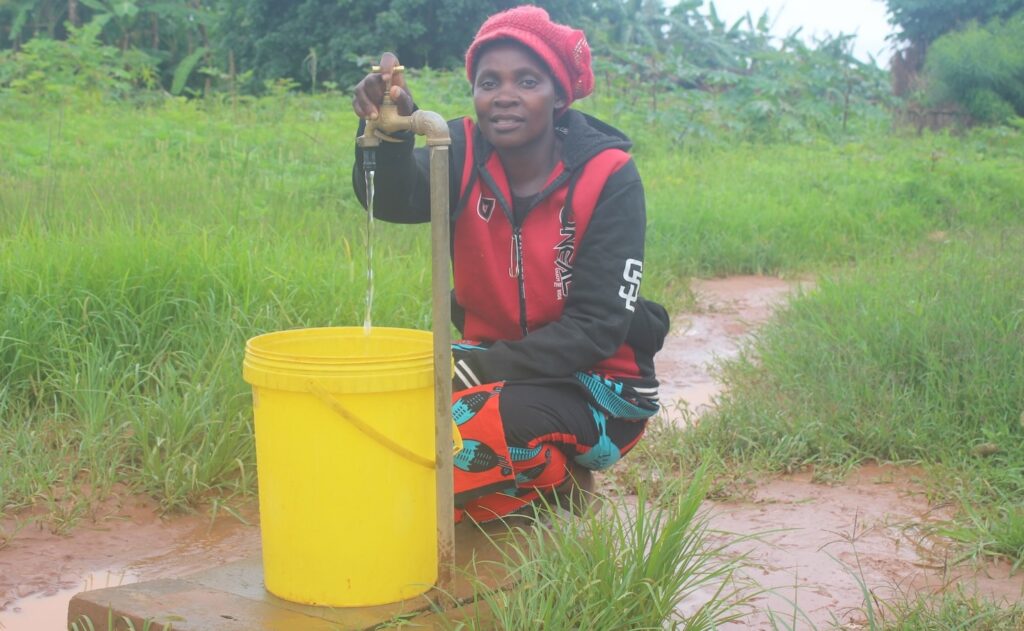
From that point on, change was steady, consistent, and sustainable. Catherine had more access to clean water. Her children no longer went without meals, and the food they ate was healthier. Catherine could plan for the future, instead of just reacting to the present.
“I can now grow my own crops and prepare nutritious meals for my children,” she explains. “Now, I am able to meet our daily household needs.”
A Healthier Beginning
But the biggest – and most important – transformation was in her young daughter Ackness.
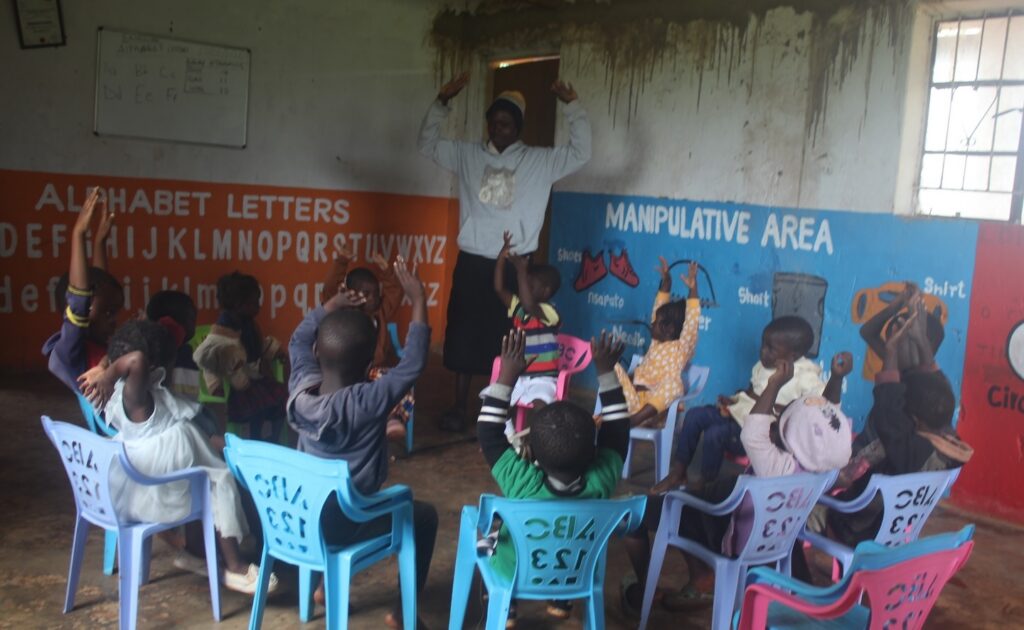
After enrolling at her local Community-Based Childcare Centre (CBCC), Ackness began receiving VitaMeal, a fortified corn-soya blend that supplies essential nutrients for early childhood development.
“My daughter’s health has improved greatly since she enrolled at the CBCC,” Catherine says. “In the past, frequent visits to the health center were part of our daily life, but that has completely changed. Through the school feeding program introduced by Feed the Children, my child is now healthy, active, and strong.”
One Household, a Wider Shift
Today, Catherine’s garden produces vegetables throughout the year. Her goats represent security during difficult seasons. Her children have more consistent access to food, education, and healthcare.
But the transformation did not stop at home.
The savings group strengthened financial resilience across the village. Care Groups provided knowledge that can be passed from household to household, and shared generationally. CBCCs provide both nutrition and early learning, reinforcing long-term educational pathways.
The Feed the Children’s Child-Focused Community Development approach creates sustainable change by working across four interconnected domains: Food & Nutrition Security, Health & WASH, Education, and Livelihoods & Resilience. Together, these systems can form the base for a new, healthier path forward for children and communities. It’s more than a one-time intervention – it reinforces the support systems around children so families can sustain progress.
Catherine feels that shift in her own life.
“This support has not only transformed my daughter’s life but has also brought hope and positive change to our entire village,” she says.
Today, Catherine still wakes before sunrise. But now her first thoughts are no longer about what is missing for today, but about what she is building for tomorrow.

 English
  Español