

When School Closes, Hunger Starts: The Hidden Reality of Spring Break
It’s the last school day before spring break, and the fifth-grade classroom is buzzing with excitement. Most of the children are fidgeting, whispering about their big plans as they count down to the final bell. There’s talk of grandparents’ houses, camping trips, family vacations. Trips to the zoo, the movie theater, the water park.
Without school, the possibilities feel endless.
Only one student doesn’t seem excited. She’s sitting in the back of the class, quiet as always. When the others leap from their seats, she drags her feet.
To her, spring break isn’t a holiday. It’s hunger.
In the United States, one in five children is facing food insecurity. For many of them, school meal programs are the most reliable source of food.
According to the most recent data from the USDA, over 21 million children each day access their school’s free or reduced-price lunch. Many also depend on school breakfast programs.
When there’s no school, those meals disappear.
That’s at least two extra meals per child, per day, that are missed. Over a five-day break, that’s a minimum of 10 extra meals parents must provide – with no increase in income. Meanwhile, rent is still due. Utility payments don’t pause. And many parents also have to pay for additional childcare, or miss work to watch their kids while school is out.
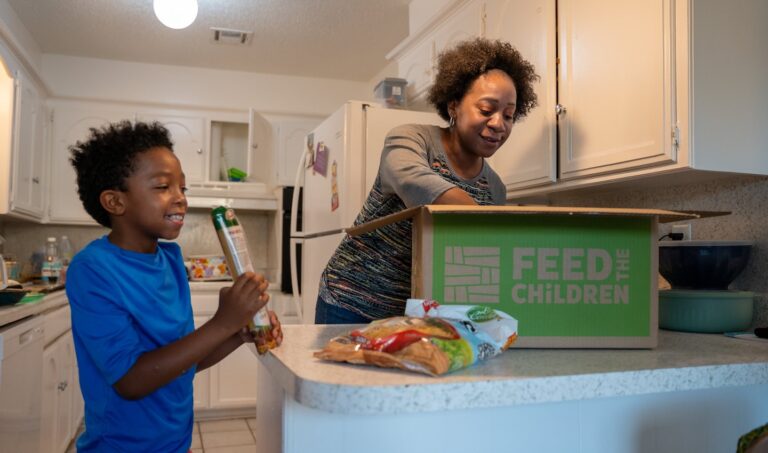
“During school, we have a little more resource,” Kim, mom of two, told us. “That gives us more leverage at home.” When school lets out for break, however: “I already know it’s going to impact my household.”
Another mom, Zoe, spoke of the frustration of not being able to provide enough for her kids to eat over their school breaks: “It’s disheartening, as a parent, to not be able to provide the lunches and breakfast. It can be very stressful.”
Most people don’t think of spring break as a high-stress time. But for families like Kim’s and Zoe’s, it’s hard to see them as anything else. These parents often give up their own meals, hoping it means their kids can eat.
Sometimes, even that sacrifice isn’t enough to make a difference – but you can.
When you donate to Feed the Children, you’re helping support families like Kim’s and Zoe’s. You can make sure that children still have food on the table, even when the school cafeteria has closed its doors. This spring break, your kindness can fill the gap of missed meals, and bring us one step closer to a world where no child goes to bed hungry.


 English
  Español