Building Community Health, One Conversation at a Time
In rural Kenya, the land stretches wide and open: scattered trees poke through the dry red earth, where small farming villages are the only sign of human life.
Out here, infrastructure is limited. Most residents do not have access to the internet, and knowledge is shared directly from person to person. While this creates strong trust between individuals, it also means that whenever there is a gap in knowledge, questions simply go unanswered, and communities go without.
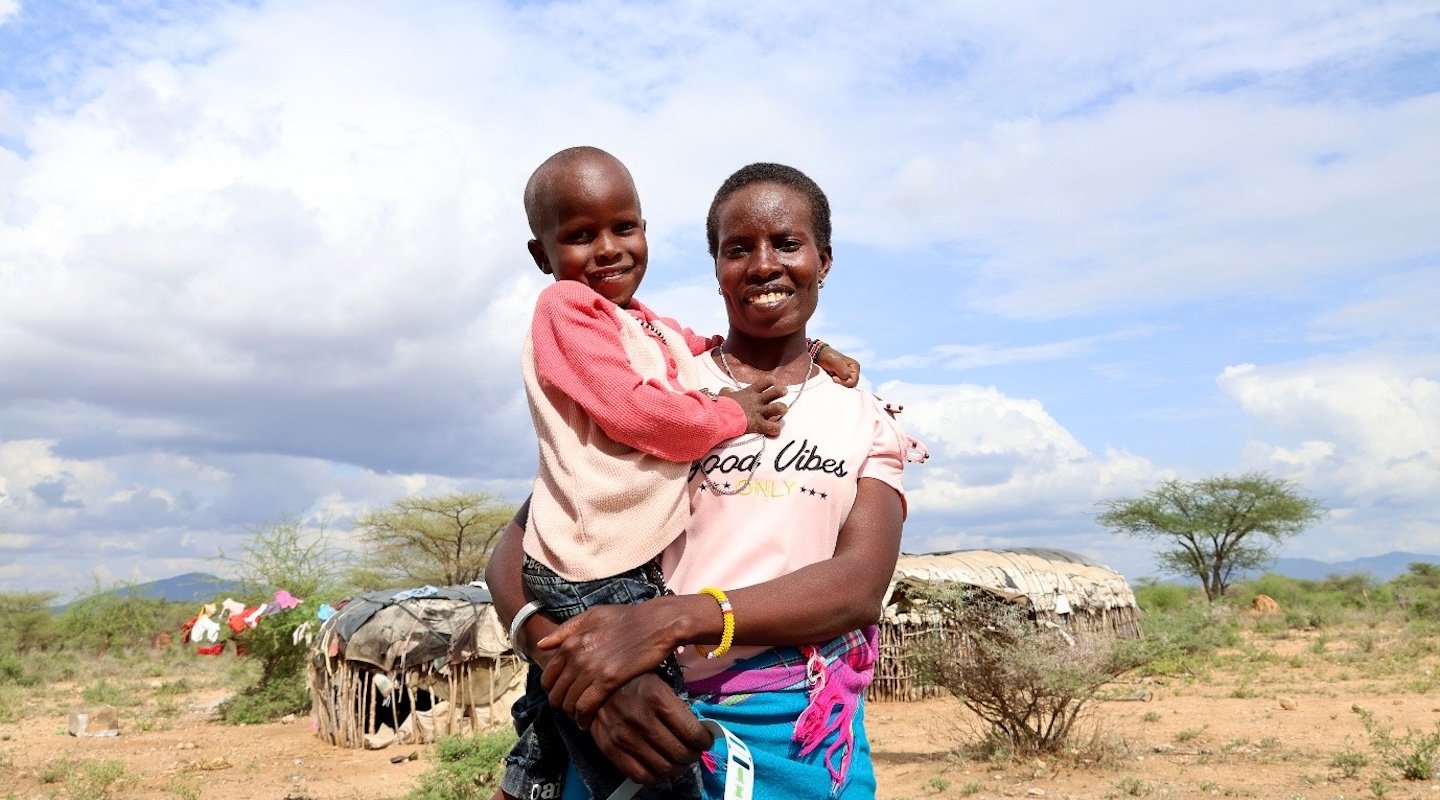
For Alesia, a 26-year-old school teacher and mother of three, the lack of education related specifically to childcare was most noticeable. She struggled to keep her two sons and daughter healthy, and as a teacher, saw the same problems affecting other students. Alesia knew there had to be a better way. She just didn’t know what it was.
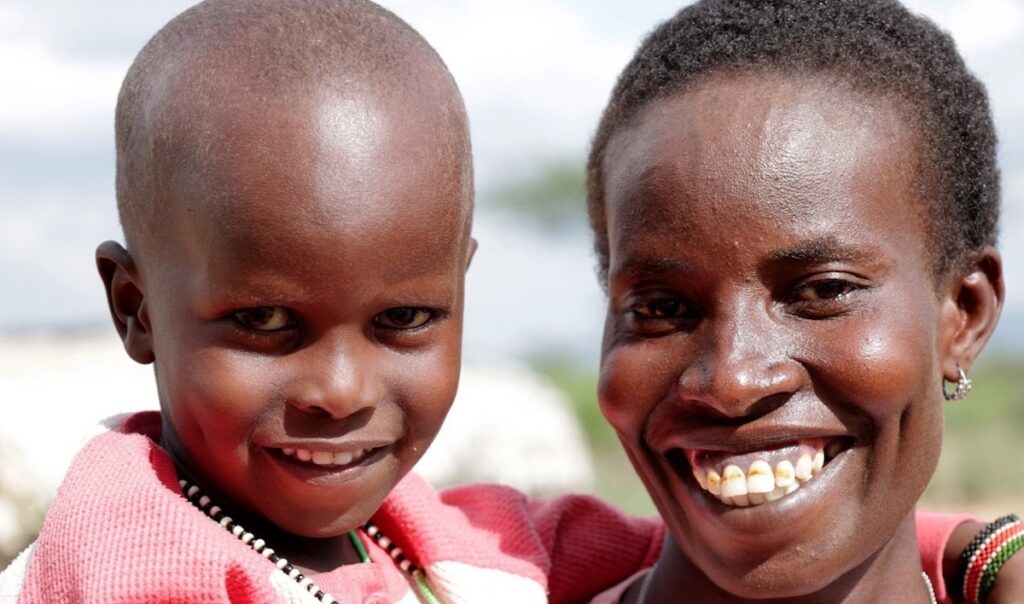
“Before joining Feed the Children programs, life was very challenging for me as a young teacher and a mother of three,” says Alesia. “My income alone was not enough to meet all household needs, and I often struggled to balance providing food, school requirements, and proper care for my children.”
For Alesia and other parents, decisions around prenatal care, immunization, and infant feeding often felt like guesswork.
Learning Together Under the Shade of Trees
That uncertainty began to shift when Alesia joined a Care Group supported by Feed the Children.
“Our Care Groups are really simple and fit right into daily life,” explains Enrico Memusi, a Feed the Children Care Group Promotor Supervisor.
The women who take part in the Care Group gather outside, listening as a Promoter leads them through a lesson using visual aids and other materials. Their young children play nearby, so the mothers can learn while keeping an eye on their kids.
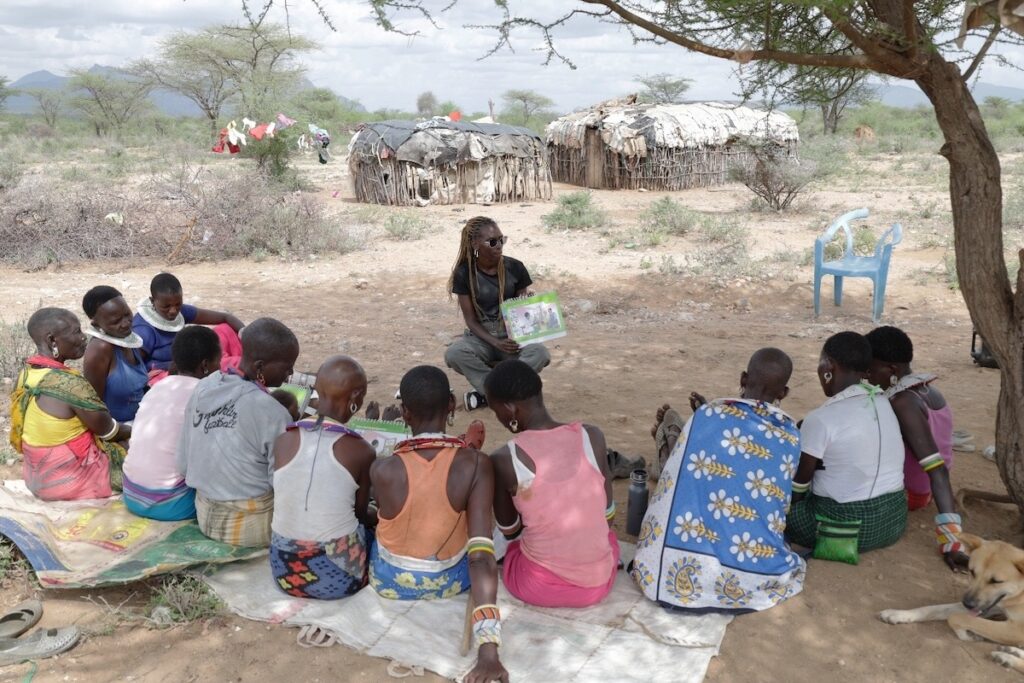
Each session lasts less than an hour and focuses on clear, practical actions: from prenatal care and nutrition to hygiene, sanitation, and child health. Afterward, each woman carries those lessons back into her household and wider community.
“Care Groups work because learning doesn’t stop when the session ends,” Enrico explains. “Women learn together, practice together, and then pass that knowledge on through daily life.”
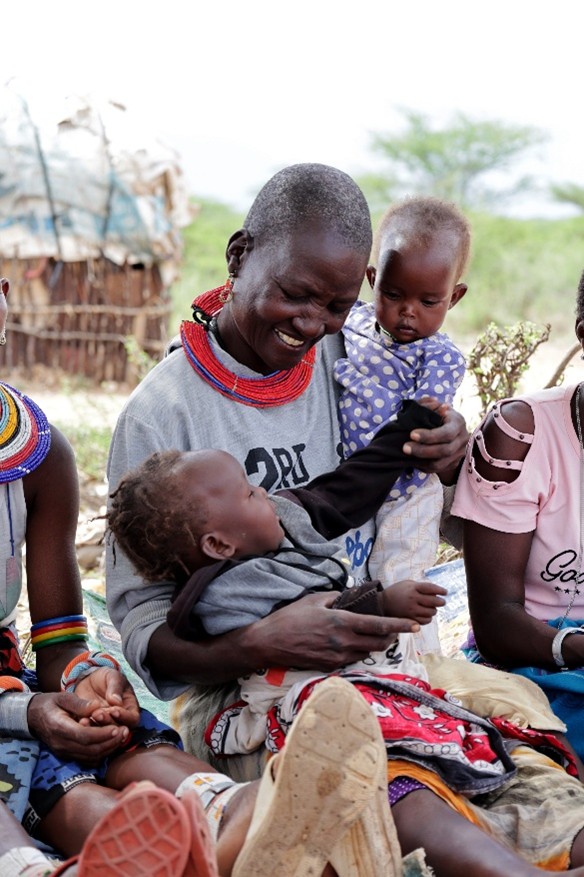
It’s a simple practice, but an effective one for increasing the flow of information.
“You can see a shift,” says Care Group Promoter Christine Lekodei. “At first, women come to listen. Later, they come with questions. And eventually, they come to share what they’ve already started changing at home.”
Healthier Choices at Home and at School
For Alesia, those lessons quickly became part of everyday life.
At home, she now prioritizes seeking care at the nearest health facility, ensuring her children receive routine immunizations, and applying what she has learned about hygiene, sanitation, and balanced nutrition.
“Now I feel more confident as a mother,” she says. “I know when to take my children to the health facility, why immunization matters, and how the choices I make every day affect their health.”
The impact is visible. Her children are eating better, sleeping well, and attending school regularly; changes that reflect both improved health and greater stability at home.
At school, her children also receive nutritious corn-soy blend porridge through Feed the Children’s school meals program, helping them stay focused and energized throughout the day.
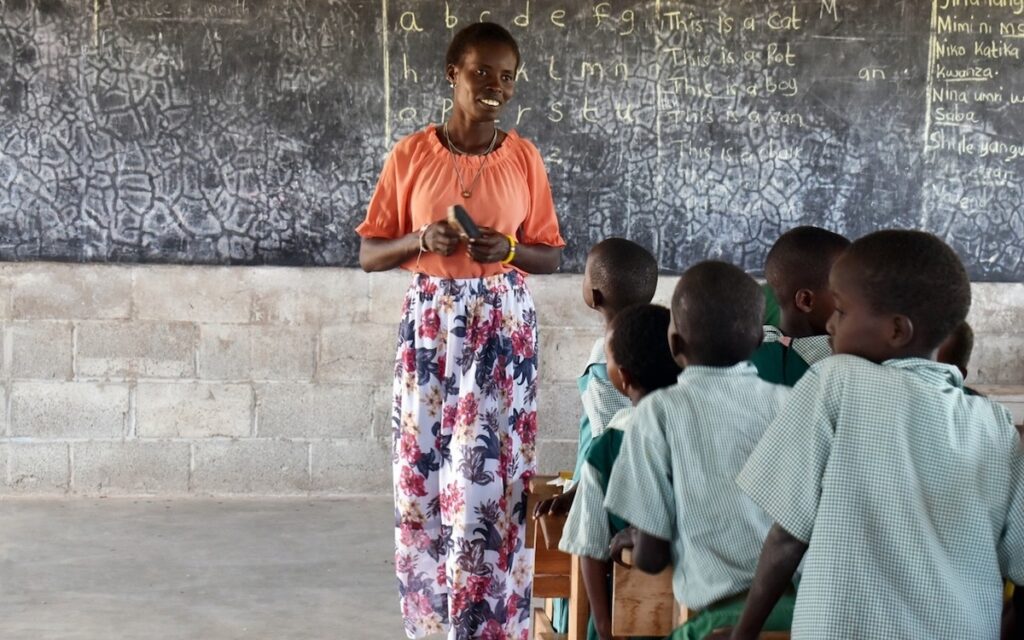
Alesia oversees this program, ensuring food is prepared safely, correct measurements are followed, and hygiene standards are maintained.
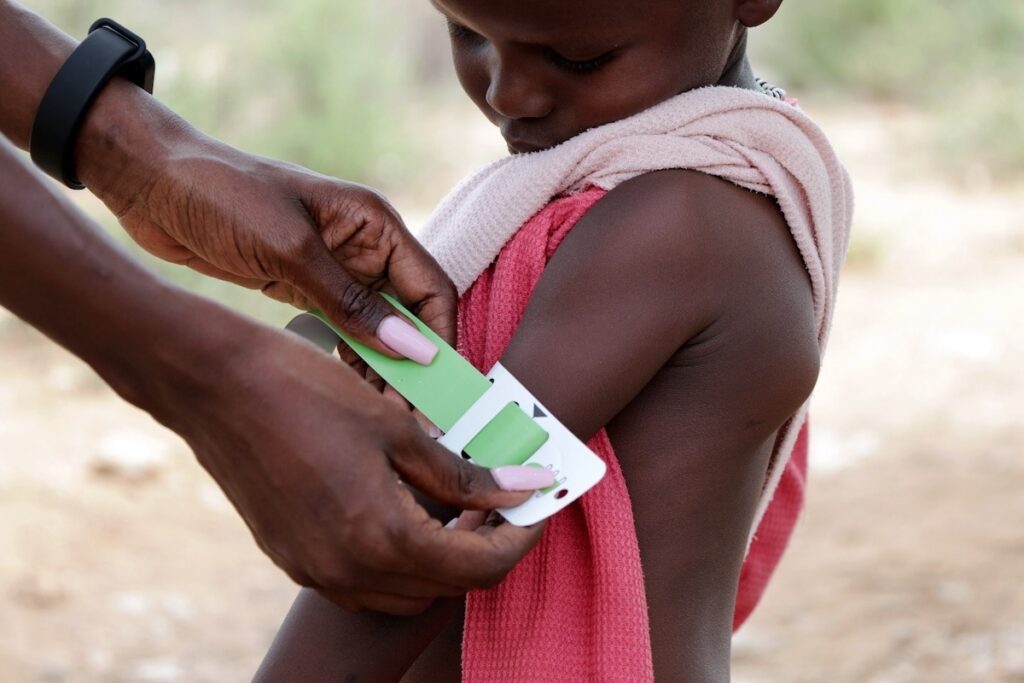
“We have seen positive changes at Lalparuai Primary School since Alesia took charge of the school meals,” says Ntilayon Lekumoisa, a school board member. “The children are more active, attendance has improved, and meals are well prepared.”
For Alesia, the connection is clear: knowledge at home, nourishment at school, and support within the community, reinforcing one another.
From Mother to Teacher, From Home to Community
Beyond her household, Alesia’s role as a teacher places her in a position of trust within the community. The confidence she has gained through Care Group sessions now shapes how she leads both in the classroom and beyond it.
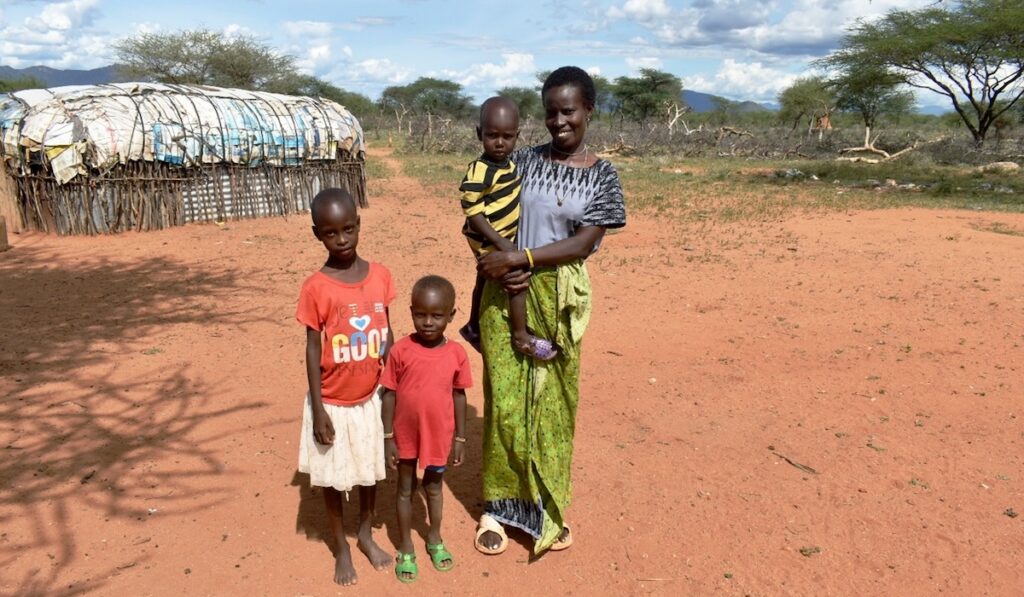
“Not only do I feel more able to take care of my children and make sure they have what they need,” says Alesia, “I can also share that knowledge with others.”
She has already begun to see attitudes shift around her:
“More parents are now accepting immunization for their children. People are more open, because they understand why these things matter.”
For Feed the Children, this interconnected progress reflects its broader approach to child-focused community development. By supporting parents with knowledge, schools with nutrition, and communities with practical tools, children are better able to stay healthy, learn, and grow.
“Ending childhood hunger isn’t only about food,” Enrico explains. “It’s about making sure families have what they need to support their children at home, in school, and in the community.”
For Alesia and mothers like her, Care Groups provide a consistent space for learning and reflection, allowing women to build confidence and reinforce positive health behaviors over time.
In Samburu, shared knowledge continues to spread, supporting healthier families and stronger communities, one conversation at a time.



 English
  Español